Ceviche
Raw fish cured in lime juice with onion and chili. The national dish, and the clearest taste of the coast.
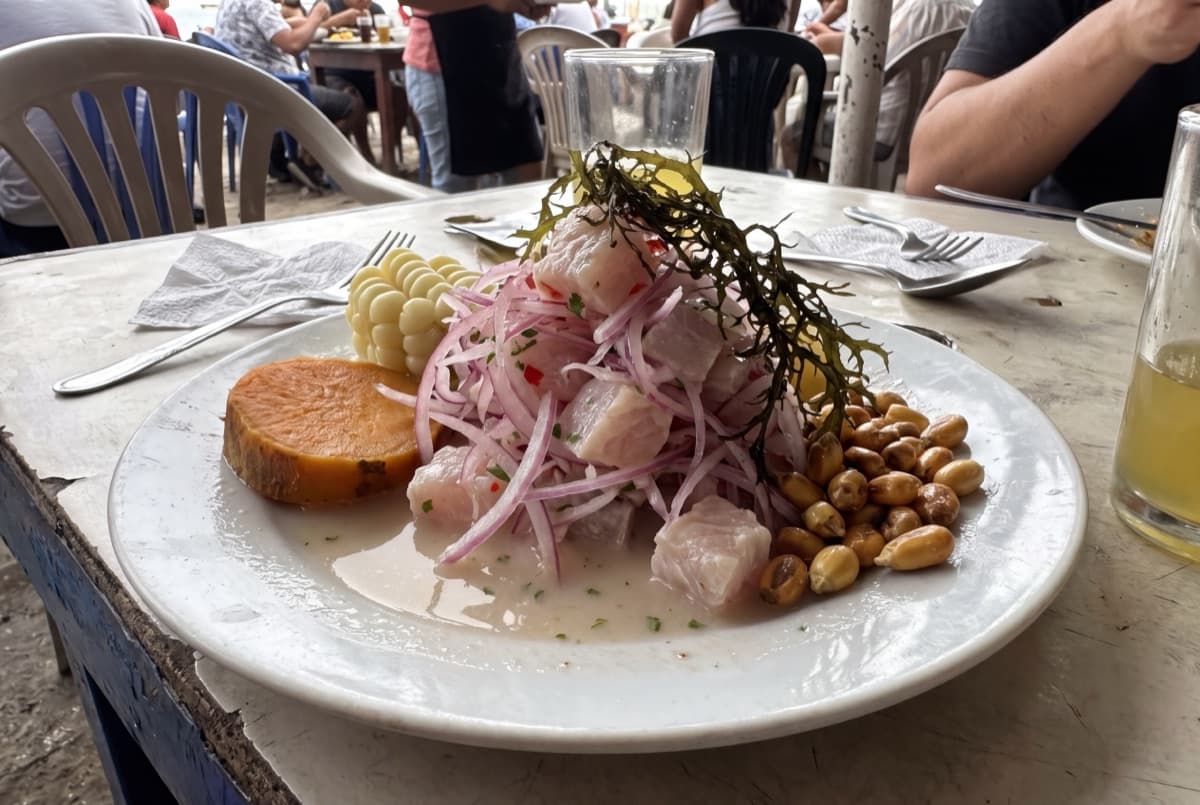
Ask a Peruvian what to eat first and the answer is ceviche. Fresh fish cut into cubes, salt, lime juice, red onion sliced thin, ají limo, a little cilantro, served the moment the lime has turned the fish opaque. On the side, a slice of boiled sweet potato, a few kernels of choclo and a handful of cancha, the toasted corn that crunches against everything else. It is finished in minutes and eaten in minutes, ideally at lunch, ideally near the sea.
The dish is older than the country. Coastal peoples were curing fish with salt and the juice of local fruit long before the Spanish arrived; the lime, the onion and the name came later and the dish absorbed them. Spelling is still unsettled, and you will see cebiche and seviche on menus beside ceviche. We do not argue about it. We argue about the fish.
What makes a ceviche Peruvian rather than simply raw fish in citrus is leche de tigre, tiger's milk: the cloudy, spicy, intensely sour liquid left in the bowl after the fish has sat in lime, salt, chili and onion. It is a sauce, a marinade and a drink. Cevicherías serve it in a glass as a cure for a late night, and cooks guard their version as closely as any recipe.
Ceviche is also one of the few things every Peruvian claims. The state declared it part of the nation's cultural heritage in 2004 and gave it a national day, June 28, in 2008. In December 2023, UNESCO added the practices and meanings around preparing and eating ceviche to its list of intangible cultural heritage, recognizing the fishers, market vendors and cooks as much as the plate. For a country with a long coast and a longer habit of eating from it, the recognition was less a surprise than a confirmation.
The best ceviche is rarely the most expensive. Look for a place that opens for lunch and closes by mid-afternoon, because the fish arrived that morning and will not be served tomorrow. Order it with a glass of leche de tigre and a cold chicha morada. Then you will understand why we put it first.
Experience it
Cook it
Saborear (to taste) is our sister site for cooking and tasting Peruvian food.
Related entries
Keep going
Eat & Drink
Pisco

Places
Lima
Eat & Drink
Chifa and Nikkei