Pisco
Our national spirit: a clear grape brandy from the southern coast, best known in the pisco sour.
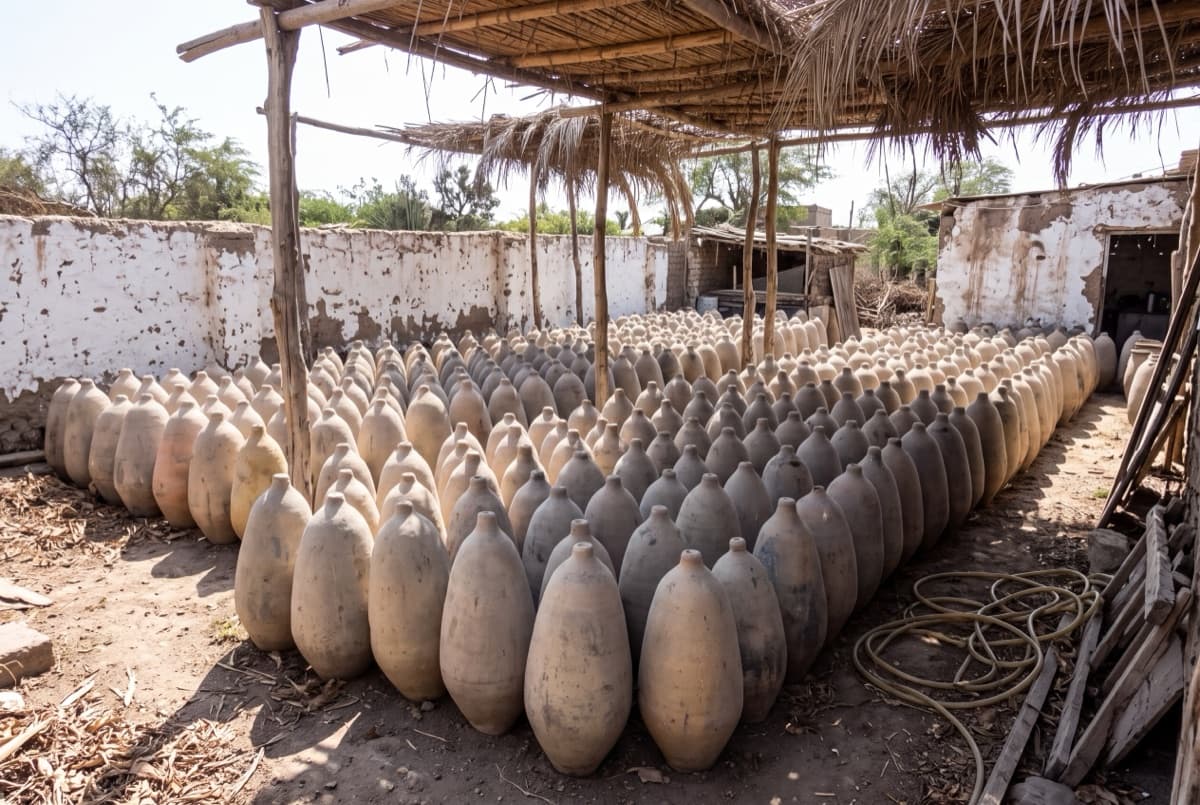
Pisco is what happens when Spanish grapes meet the Peruvian desert. Vines arrived with the conquest, and within a century growers in the dry valleys south of Lima were distilling their wine into a strong, clear brandy, named, like so many things here, after the place it shipped from: the port of Pisco, on the coast of Ica. The word itself is older than the drink. In Quechua, pisqu means bird, and the coast around the port has always been full of them.
What makes pisco pisco is a set of rules we take seriously. It can only be made in five regions along the coast, Lima, Ica, Arequipa, Moquegua and Tacna. It can only use eight grape varieties: four non-aromatic ones led by Quebranta, and four aromatic ones led by Italia. It is distilled to drinking strength in a single pass, so nothing is added afterward, not water, not sugar, not color. And it rests in steel, glass or clay, never in wood, so what you taste is the grape and the still, not the barrel.
Those rules produce three styles. A pisco puro uses a single grape. An acholado blends several. A mosto verde is distilled from must that has not finished fermenting, which makes it softer, rounder and more expensive. A good producer will pour you all three and expect you to have an opinion.
Most of the world meets pisco in a glass with foam on top. The pisco sour, pisco shaken with lime, syrup, egg white and a few drops of bitters, is usually credited to a Lima bar in the early twentieth century, and it became the national cocktail without anyone deciding it should. We celebrate it on the first Saturday of February. But in Ica, and increasingly in Lima, people drink pisco the way it was made to be drunk: neat, at room temperature, from a small glass, slowly.
To taste it properly, do what the producers do. Warm the glass in your hand, smell it twice, take a small sip and hold it. A Quebranta should taste of dried fruit and earth; an Italia of grapes and flowers. If it burns, it is not the pisco, it is the pace.
Experience it
Taste it
Saborear (to taste) is our sister site for cooking and tasting Peruvian food and drink.
Related entries
Keep going
Eat & Drink
Ceviche

Places
Lima
Heritage
The Afro-Peruvian Cajón