The Afro-Peruvian Cajón
A wooden box drum invented on Peru's coast by enslaved Africans and their descendants. Now played around the world.
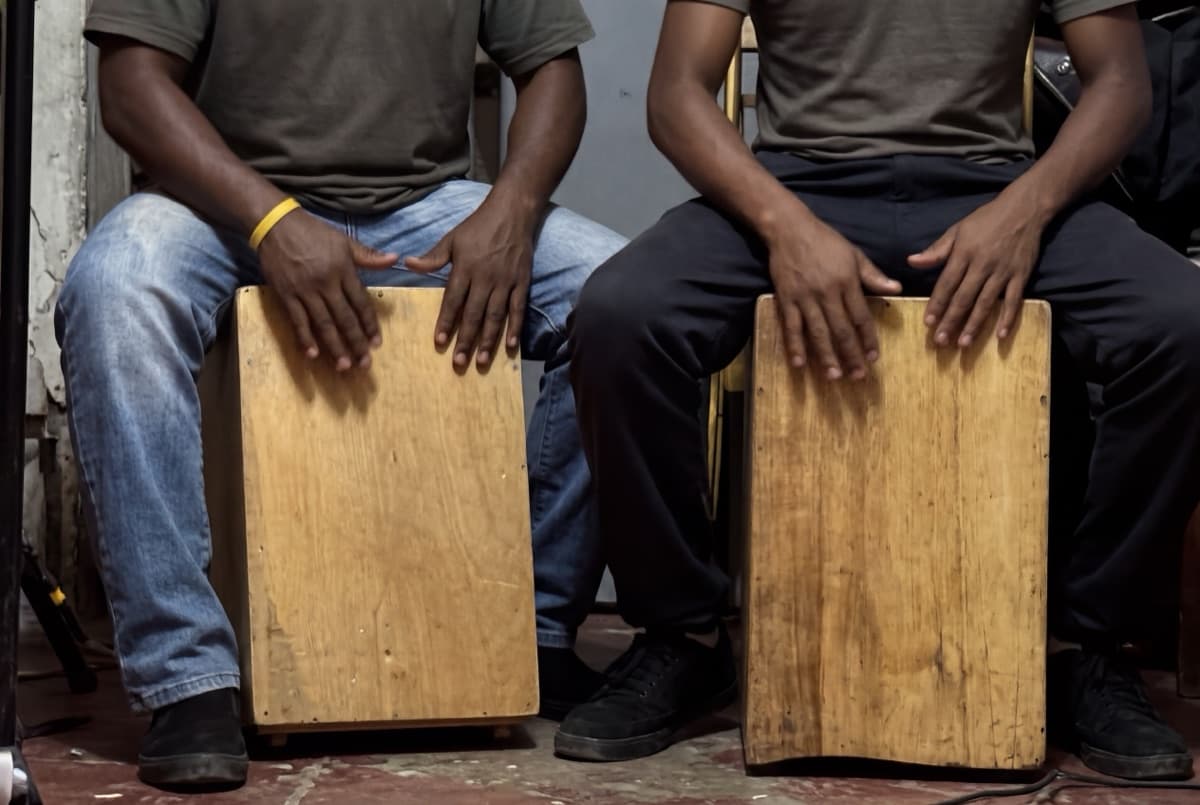
The cajón is a box. Five sides of thick wood, one thin face of plywood, a hole in the back, and a person sitting on top of it slapping the front with open hands. That is the whole instrument. Out of it comes a bass as deep as a kick drum and a slap as sharp as a snare, and the most recognizable sound in Afro-Peruvian music.
It was born of prohibition. Africans brought to Peru as enslaved people, from the sixteenth century onward, worked the plantations of the coast south of Lima, and the authorities, like slaveholders across the Americas, feared drums and banned them. People played what was at hand: shipping crates, fruit boxes, drawers pulled out of a dresser. By the nineteenth century the box had a shape and a name, and the music built around it, the festejo, the landó, the zamacueca, had become the sound of the coastal valleys, above all El Carmen in Chincha, which is still its heartland.
For much of the twentieth century that music survived in families and neighborhoods rather than on stages. Its revival owes a great deal to the siblings Nicomedes and Victoria Santa Cruz, who in the 1950s and 1960s collected, performed and taught Afro-Peruvian songs and dances that were close to being lost, and to the group Perú Negro, founded in 1969. Singers like Susana Baca later carried it to the rest of the world. Peru declared the cajón part of the nation's cultural heritage in 2001, and we celebrate it with a day of its own.
Then the box left home. In the late 1970s the Spanish flamenco guitarist Paco de Lucía visited Lima, heard the cajón, took one back to Spain, and flamenco has had a cajón in it ever since. From there it went into pop, folk, worship bands and busking on every continent, usually with no idea where it came from. We do not mind that people play it. We mind when they do not know whose it is.
Being Peruvian includes this coast, this music and the Black Peruvians who made it. The country has not always said so clearly. The cajón says it every time someone sits down and hits the front.
Experience it
Go deeper
The next step is to hear it in place. Until a Made in Peru listing of workshops and venues exists, the entries below put the coast around the instrument.
Related entries