The Potato
Born in the Andes and grown here in thousands of native varieties. The root of the whole cuisine.
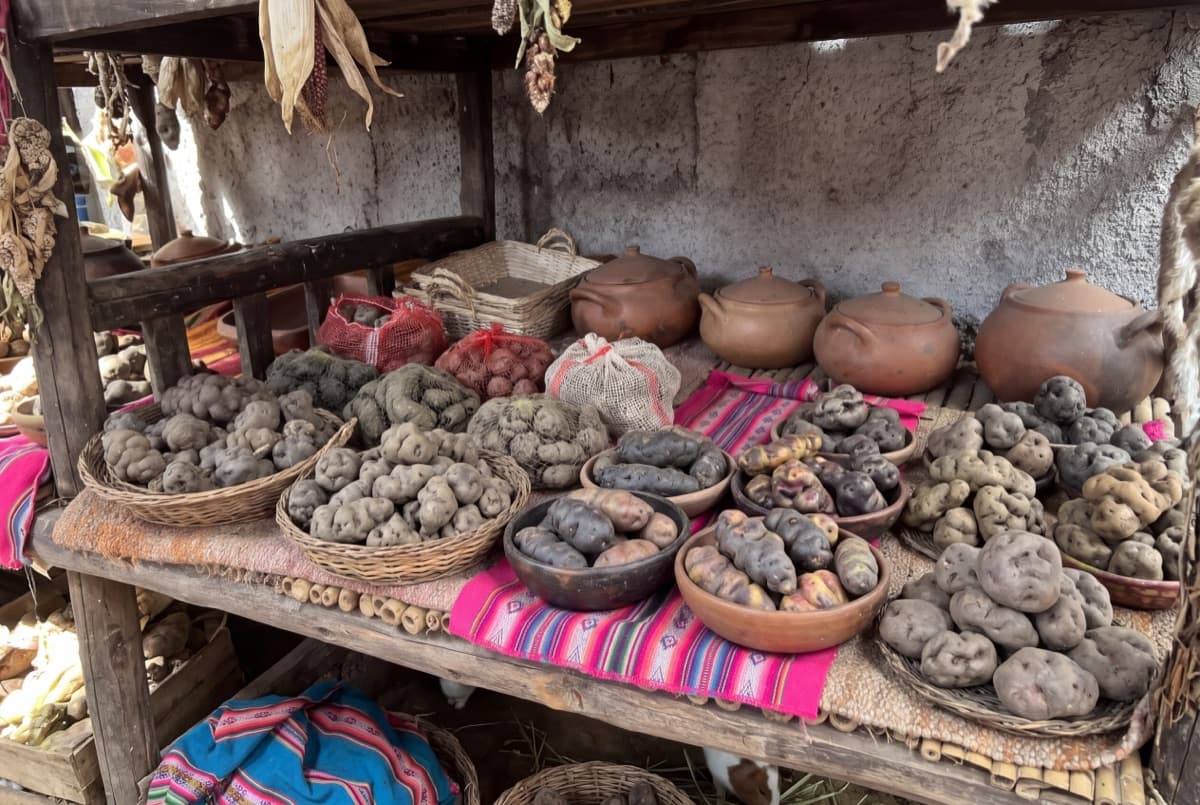
Before the potato belonged to Ireland, Idaho or anyone's dinner table, it belonged to the Andes. Farmers on the high plains around Lake Titicaca, between what is now Peru and Bolivia, domesticated wild tubers thousands of years ago and bred them, over centuries, into the crop that would eventually feed the world. When we say the potato is Peruvian, we are not being proud. We are being precise.
What the rest of the world grows is a handful of varieties. What we grow is thousands. Walk through a market in Cusco or Huancayo and you will see potatoes that are purple all the way through, yellow and waxy, red-skinned, long and knobbly like a hand. Each has a name, a village, an altitude and a use. Some are for boiling, some for soup, some for the freeze-dried chuño that farmers make by leaving tubers out in the frost and treading the water from them, a storage method older than the Incas. The International Potato Center in Lima keeps the world's largest collection of them.
That diversity is not a museum. It is how families at 3,500 and 4,000 meters eat through a bad year, because a field with twenty varieties does not fail all at once. Communities near Pisac in the Cusco region run a Parque de la Papa, a potato park, where they grow and protect hundreds of native varieties on their own land, on their own terms.
The potato also sits at the bottom of nearly every dish we love. Papa a la huancaína, boiled potatoes under a cold sauce of cheese and yellow chili. Causa, a chilled, pressed cake of mashed yellow potato layered with avocado, chicken or seafood. Ocopa from Arequipa, carapulcra made from sun-dried potato, the papas fritas tossed through lomo saltado. Take the potato away and Peruvian food collapses.
We give it a day, May 30, the Día Nacional de la Papa, and we give it a word in two languages: papa in Spanish, papa in Quechua, which is where Spanish took it from. The next time someone tells you the potato is humble, hand them a purple one and ask where they think it came from.
Experience it
Cook it
Saborear (to taste) is our sister site for cooking and tasting Peruvian food.
Related entries
Keep going
Eat & Drink
Ceviche
Heritage
Quechua
Made in Peru
Alpaca and Andean Textiles