Quechua
The language of the Incas, still spoken by millions in the Andes. You already use some of its words.
If you have ever said llama, puma, condor, quinoa or jerky, you have spoken Quechua. The language the Incas carried across the Andes left its words in Spanish and from there in English, usually for the things only the Andes had: the animals, the crops, the dried meat that fed armies. Ch'arki became jerky. Kinwa became quinoa. Wanu became guano. The words traveled; the language stayed home.
Quechua speakers call it Runasimi, the people's speech. It is not one language but a family of closely related ones spoken from southern Colombia to northern Argentina, with the largest number of speakers here in Peru, several million people, most of them in the southern highlands around Cusco, Puno, Ayacucho and Apurímac. It has been an official language of Peru alongside Spanish since 1975, and the current constitution recognizes it, along with Aymara and the other native languages, as official wherever it is the main language spoken.
The Incas did not invent it; they adopted it as the administrative language of an empire that stretched for thousands of kilometers, which is why it spread so far. They ran that empire without writing as we know it, keeping records on khipu, knotted cords of colored string, which is another word you may know. After the conquest, Spanish priests learned Quechua to preach in it, and the first grammar was printed in 1560. For most of the centuries since, speaking it marked you as rural, poor and Indigenous, and many families stopped passing it on to protect their children. That is changing. There is Quechua on television, in universities, in hip-hop, and in the mouths of young Cusqueños who are learning the language their grandparents were told to forget.
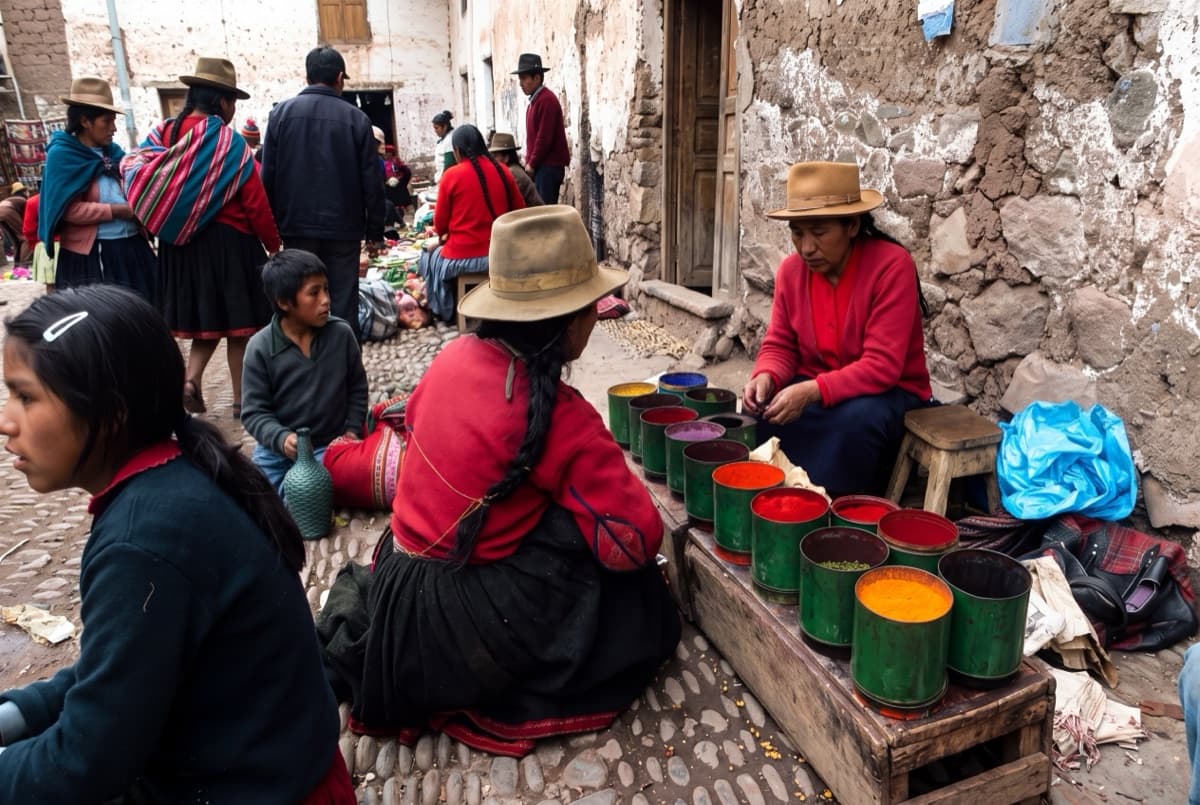
A few words will carry you a long way. Allillanchu, how are you. Allillanmi, I am well. Sulpayki, thank you. Yaku, water. Wasi, house. Inti, sun. Pachamama, mother earth. Say them in a highland market and watch the conversation change.
Being Peruvian does not require speaking Quechua; most of us do not. But a country where the language of the Inca state is still spoken every day, in kitchens and fields and on the radio, is carrying something most countries have lost. We want you to hear it while it is still everywhere.
Experience it
Go deeper
There is no trip to book or dish to cook for a language. The next step is the entries below, where the words show up in place.
Related entries
Keep going
Heritage
Inti Raymi
Places
Machu Picchu
Eat & Drink
The Potato